Mayday... Everyday
A first-person space-sim about delivering cargo while your ship falls apart around you.
Game & Systems Designer
Role
AIV Production Project · Team of [8]
Jam
Unreal Engine 5 (Blueprints) · Excel · Confluence · Jira · Miro
Tools
Jan 2026 – Present
Duration
PC - Windows Build
Platforms
7 / 7 milestone reviews passed
Pitch approved! The project moved into production
−60% iteration time
Thanks to an Excel balancing simulation
THE GOAL
Keeping the cargo alive and the player sane
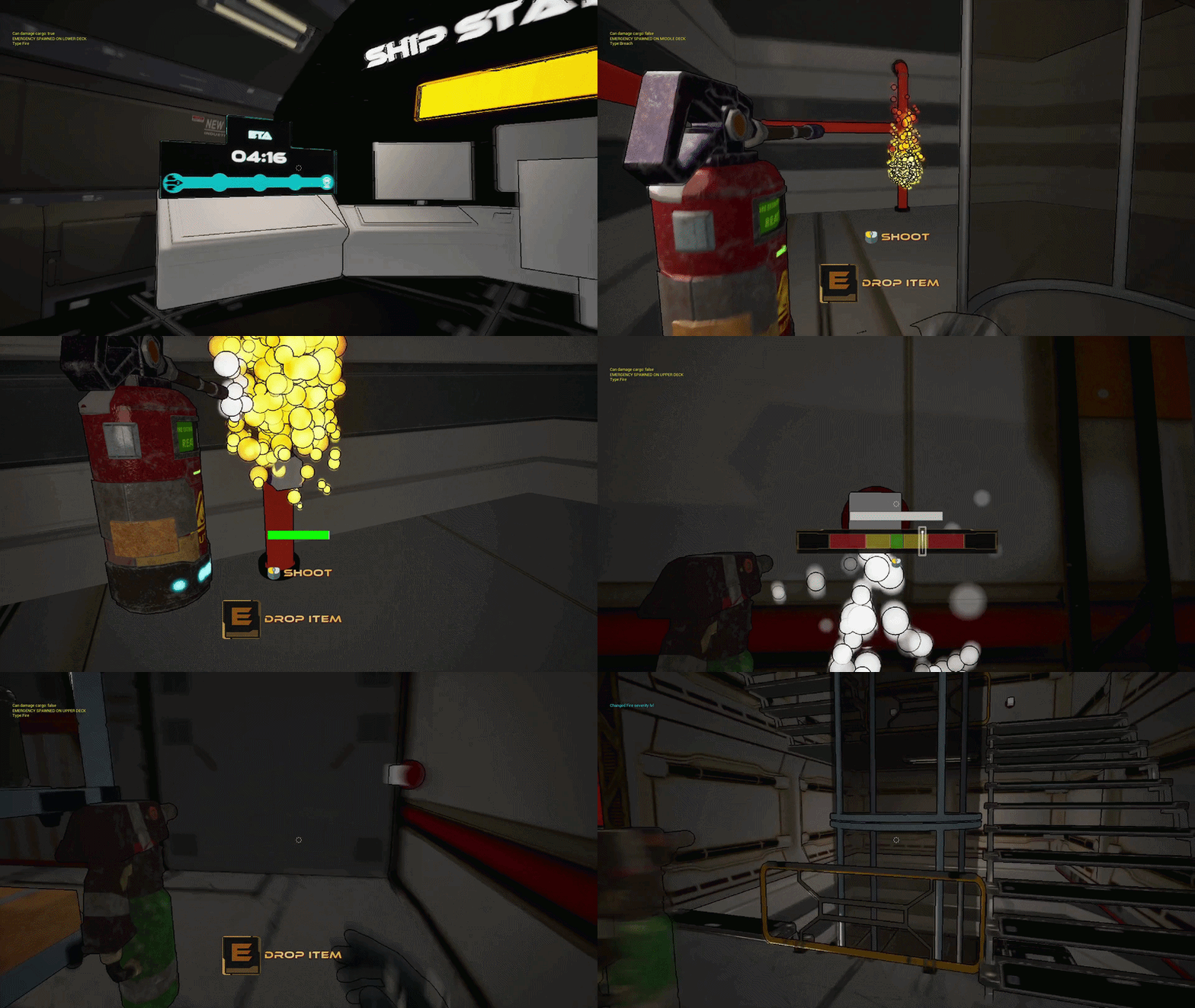
Players fly cargo across space while the ship keeps breaking down: hull breaches, fires, failing flight terminals. Their pay depends on how much cargo survives the trip.
My goal was a game that feels like constant crisis without ever feeling unfair, and a design clear enough for the whole team to build it on time.
DESIGN DECISION · CORE LOOP & PACING
A delivery game where everything goes wrong
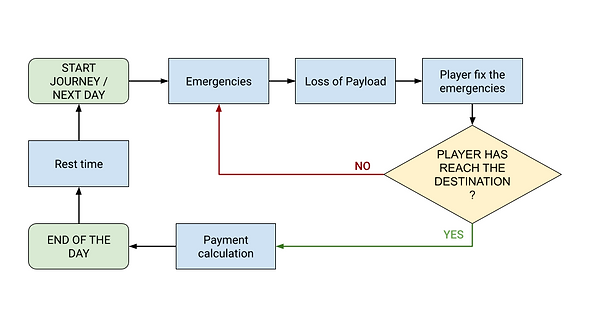
I built the core loop around mechanical degradation: during each trip, emergencies hit the ship and slowly destroy the cargo, and the player decides what to fix first. Constant pressure, though, quickly leads to burnout.
So I split each trip into pacing cycles: spikes of multiple failures at once, followed by calm windows I called Pillow Time, where players can catch their breath, reprioritize, and stabilize the ship.
Tension works because it has valleys.

DESIGN DECISION · ECONOMY & BALANCING
How I used spreadsheets to stress out my players
In this game, time is the real currency: the payout is the percentage of cargo you save, and every second spent ignoring an emergency costs money.
Before scripting anything in Unreal, I built an Excel simulation that models cargo decay against player response times, across three tiers of emergencies and a five-day difficulty curve, with trips growing from 3 to 6 minutes.
Testing the balance in a spreadsheet instead of in the engine cut our iteration time by 60% and helped me adapt the design to what our programmers could realistically build.
ITERATION
"Too hard", said the publisher
The Control Room, a board that acts as our publisher, evaluates our project and approves each milestone.
Their feedback was clear: the game was too hard. I rebalanced the simulation and added three difficulty levels.
Before
One difficulty, too punishing
After
Rebalanced curves, three difficulty levels